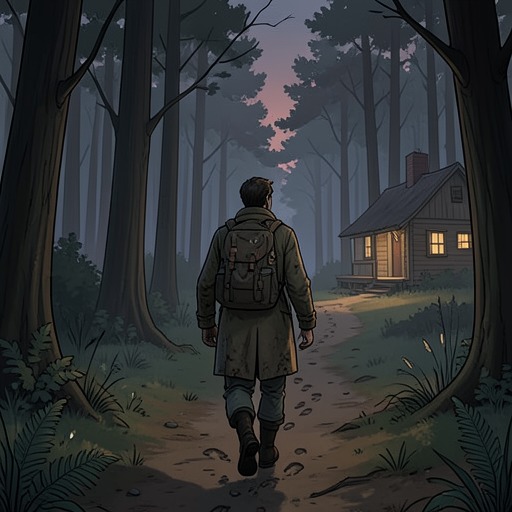
Ben's chukar hunt in the Columbia River breaks
East of the MountainsBen Givens’s chukar hunt in the Columbia River breaks turns a journey shaped by his intention to die into an encounter with the limits of that intention. He crosses into unfamiliar country expecting to hunt, and the first birds he shoots bring both the old competence of a hunter and a sharp recognition that killing birds cannot make a fitting end to the life he has lived as a doctor, husband, and father.
Setting and Decision
Ben and his dogs reach the west bank of the Columbia River and cross the highway bridge single file. A drifter carries Ben’s duffel while Ben wears his rucksack and keeps the dogs close on their leashes. The river lies broad below them; beyond it, the breaks rise toward the plateau. Ben has not hunted this stretch before, and its unfamiliarity does not dissuade him. Hunting birds in the open air is what he came to do.
The crossing also presents an immediate alternative: the drifter suggests that Ben leave his dogs in the bushes and try to get a ride. Ben refuses. He has changed his mind, he acknowledges, and chooses to hunt the chukars instead. The decision is a real turn in the journey, but not yet a renunciation of his larger plan. He chooses an activity that belongs to the life he knows without resolving what he will ultimately do.
The First Covey
Ben encounters his first chukars in the early evening, when the birds are feeding along a ridge crest. He hears their calls before the dogs locate their scent and pauses to work out where the covey is. Tristan grows alert and moves toward the breeze; Rex follows the scent down into the breaks. As the calling stops, Ben moves between the dogs, prepares for a possible flush, and accounts for the low sun that may face him when the birds rise.
Tristan eventually points, and the dogs move again as the birds flush. When they go on point together in high bunchgrass, Ben takes the safety off his shotgun and steadies himself. The moment carries a hesitation he recognizes from a lifetime of hunting: even as a child shooting mourning doves with his father, he had felt doubt before taking a bird’s life. After the war, when killing had become part of his experience, he stopped hunting and fishing altogether. Following Rachel’s death, he returned to hunting, and in the previous two autumns had again shot small birds and waterfowl. The scene thus joins a childhood practice, a postwar refusal, and a bereavement-era return to killing.
A chukar rises near Rex, and Ben shoots. More birds break from cover, and he fires again at a bird that climbs away wounded. He is startled by how well he has shot despite having the use of only one eye; that success feels less like reassurance than an injustice to the birds brought down by his father’s gun. He hunts farther downhill, misses once, and then takes other birds. One flushes from behind a stone tower and approaches on a steady line below his gun before he shoots it as it moves away.
Recognition and Reversal
Holding the last bird, Ben attends to its patterned feathers and the warmth still in it. The encounter makes the circumstances of his planned death newly legible to him: he had imagined dying alone in arid sage country after killing small birds, but can no longer regard that as an adequate conclusion. The hunt and the land do not supply a sufficient reason for the end he chose. He sees the plan as a form of stoic machismo, and recognizes that both hunting as a final earthly act and taking his own life conflict with the life he has lived and the understanding he has of himself and the world.
This recognition does not arise from a speech or a rescue, but from the action he had sought: he hunts, shoots, and then holds a bird in his hand. The scene makes the intended ending feel misdirected by setting the physical fact of a dead bird against Ben’s identities as a physician, husband, and father. His competence has not settled the moral question of killing; instead, the successful hunt clarifies why the proposed final act cannot serve as a meaningful answer.
The Hunt’s Immediate Aftermath
Ben puts the bird in his coat pocket and climbs the breaks in the failing light, feeling pain and fatigue. The dogs are nearby, but he is too weary to pay attention to them as he makes his way upward. He cannot manage the long walk back into Vantage, so he waits for his condition to improve. When it does not, he climbs in stages until he reaches his rucksack.
The hunt therefore ends without a clean return or a completed resolution. Ben has not yet turned his recognition into a fully stated decision to abandon his plan, and the physical demands of the landscape remain. But the value of the journey has shifted: what began as an attempt to make hunting and death coincide has exposed the inadequacy of that design. The bird in his pocket is both the result of the hunt and the concrete occasion for reconsidering what kind of ending his life can bear.